
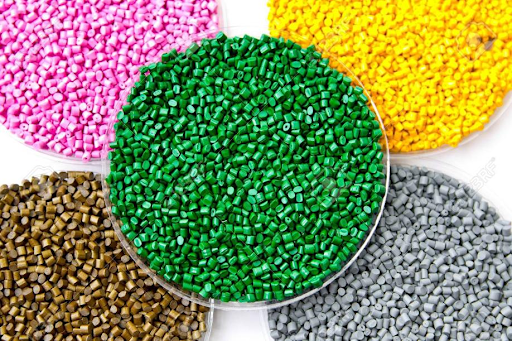
Industrial plastics tend to fail when it comes to bending, stress, or low-temperature applications. Industrial players seek ways in which plastics can be made more movable without sacrificing the strength and processing aspects. In this regard, plastic EVA masterbatch is a key player in achieving a modification in the properties of polymers so that these tend to behave more elastically. Such properties are evident in cables, footwear components, films, or injection molds, where flexibility defines the lifespan.
- Understanding EVA-Based Modification: EVAs soften because of the vinyl acetate that gives it an uneven structure that lacks the hardness of other plastics. Since it is combined in a form that melts into an even application through the processing of other materials to make its formulation, it has excellent flexibility that does not result in cracking. In industrial applications, flexibility is key.
- Impact on Industrial Processing Consistency: Improved flexibility processing should not disrupt the flow in manufacturing. EVA masterbatches help to maintain easy extrusion and injection molding processes. This is achieved through the minimization of internal stresses during melt processing. As a result, there will be fewer issues regarding the surface finish. Additionally, the machines will function more uniformly.
- Performance Under Repeated Mechanical Stress: Several industrial products encounter constant motion, pressure, and bending. This stress affects EVA-modified plastics by absorbing the stress instead of concentrating the stress at the fracture point. The effect is gradual instead of being abrupt. This results in the component retaining its intended function and appearance despite the constant stress encountered. This makes the component ideal for use in stressful conditions where endurance and flexibility coexist.
- Compatibility with Diverse Plastic Systems: EVA masterbatch has good compatibility with a number of common industrial polymers. This allows the manufacturer to fine-tune flexibility without having to redesign the whole formulation. Changes can be made by dosage rather than base material. This kind of adaptability will support faster development cycles and help industries respond quickly to changing performance needs.
- Role in Longevity of the Finished Product: Increased flexibility directly impacts the lifetime of a plastic product. EVA-enhanced materials resist wear caused by folding, vibration, or handling. This reduces replacement frequency and material waste. In industrial applications, an extended service life leads to sustained operations with reduced maintenance effort and better trust in plastic components performing critical functions.
- Effect on Temperature-Driven Flexibility: Industrial plastics have been known to work in environments with fluctuating temperatures. EVA modified compounds have the ability to remain flexible at low temperatures compared to standard plastics. EVA modified compounds will not become brittle at low temperatures. Thus, the products will work well in environments with fluctuating temperatures. This is an advantage since the products will be used in diverse environments without the need for the use of different grades. This makes it easy for an engineer in a large industrial setup.
In conclusion, the applications in the industrial plastic sector require materials that can move without failing, and the role of EVA-based modification in satisfying this requirement plays an essential role. While considering the role of flexibility in improvement, other alternatives, such as the use of the silicone Masterbatch in the applications, may be put into comparison. The role of the component in flexibility takes into account the processes involved in the applications.